
Equip your team with the skills and knowledge needed to navigate crises. Our crisis training services help organizations build resilience and stay operational through disruptions.
In today’s fast-paced and unpredictable business environment, ensuring organizational resilience and regulatory compliance is more critical than ever. Our team specializes in developing comprehensive Business Continuity Management Systems (BCMS) that safeguard your operations against disruptions. We conduct thorough Business Impact Analyses (BIA) and Technology Impact Assessments (TIA) to identify critical business processes and technical dependencies. By prioritizing essential functions and establishing realistic recovery time objectives, we create detailed action plans and standard operating procedures that enable your business to maintain and quickly resume operations during any disruption.
Our services are designed to cater to a wide range of industries, ensuring that every organization can benefit from our expertise.
We offer the following sub-services to help you achieve robust business continuity:
Our Business Continuity Management Systems (BCMS) are meticulously designed to align with ISO 22301 standards, ensuring that your organization meets international best practices for business continuity. By implementing a BCMS, you can create a cohesive framework that integrates both corporate and departmental systems, providing a unified approach to managing disruptions.
Ensuring that your BCMS complies with international standards for business continuity management.
Developing detailed documentation that outlines policies, procedures, and responsibilities.
Creating a system that aligns corporate objectives with departmental processes.
A Business Impact Analysis (BIA) is a cornerstone of any robust business continuity plan. Our BIA services are designed to provide a systematic approach to identifying and evaluating the potential effects of disruptions on your organization’s critical business processes. By conducting a thorough BIA, you can prioritize essential functions and allocate resources effectively to ensure operational resilience.
Determining which processes are essential for your operations.
Setting realistic goals for recovery times and data restoration.
Understanding how different processes rely on each other.
A Technology Impact Assessment (TIA) is essential for evaluating the potential effects of technology-related disruptions on your organization’s operations. Our TIA services are designed to ensure a systematic approach to identifying critical technical dependencies and developing strategies to mitigate risks. By conducting a thorough TIA, you can ensure that your technology infrastructure supports your business continuity objectives and integrates seamlessly with your disaster recovery planning and service level agreements (SLAs) with third-party vendors.
Evaluating how technology disruptions could affect your business.
Ensuring that your TIA aligns with your overall disaster recovery strategies.
Evaluating and ensuring that SLAs with vendors support your business continuity and recovery objectives.
Action plans and standard operating procedures (SOPs) are essential components of an effective business continuity plan. They provide clear, step-by-step instructions for responding to and recovering from disruptions, ensuring that your organization can maintain operations and minimize downtime. Our approach ensures that these documents are not only comprehensive but also user-friendly and easy to follow during a disruption.
Creating specific, easy-to-follow plans for different types of disruptions.
Establishing clear, concise procedures for essential tasks.
Ensuring that action plans and SOPs are written in plain language and include visual aids where necessary.


Discover our customized plans designed to meet your business’s unique needs and leverage our extensive expertise across various industries to ensure your resilience.
Scroll Right To View More ->

By developing a robust BCMS that aligns with ISO 22301 standards, your organization can ensure it is well-prepared to handle any unexpected events. Our team will work closely with you to create a tailored system that meets your specific needs, integrates seamlessly across all levels of your organization, and helps you achieve long-term resilience.
By adhering to international standards, your organization becomes more resilient to disruptions.
Aligning corporate and departmental levels ensures seamless integration and response.
Meeting industry standards and regulations helps avoid legal issues.
Effective planning minimizes the adverse effects of disruptions.

Conducting a thorough BIA is essential for ensuring that your organization can continue to operate during and after a disruption. Our team will guide you through the process, providing you with the information needed to make informed decisions and strengthen your business continuity plan. We ensure that your BIA is comprehensive, systematic, and effective in enhancing your organization’s resilience.
Identifying critical processes helps prioritize resources effectively.
Detailed analysis supports better resource allocation and strategic planning.
Prioritizing essential functions minimizes operational interruptions.

By conducting a TIA, your organization can ensure that its technology infrastructure is robust and capable of supporting business continuity efforts. Our team will work with you to identify potential risks and develop strategies to mitigate them, helping you achieve a resilient and reliable technology environment. By aligning standards and integrating disaster recovery planning and SLAs with third-party vendors, we ensure that your TIA is comprehensive, systematic, and effective in enhancing your organization’s resilience.
Identifying critical technology assets clarifies dependencies.
Effective planning minimizes operational impact during disruptions.
Ensuring technology supports overall business continuity goals.
Evaluating SLAs ensures vendors meet continuity and recovery standards.

Having well-defined, user-friendly action plans and SOPs in place is crucial for ensuring that your organization can respond effectively to any disruption. Our team will help you develop and implement these essential components, providing you with the tools needed to maintain operations and recover quickly. By focusing on usability, we ensure that your staff can easily understand and execute the necessary steps during a disruption, enhancing your organization’s resilience.
User-friendly plans provide straightforward instructions.
Clear procedures minimize uncertainty and enhance response.
Well-defined roles and responsibilities improve teamwork.
Efficient action plans reduce downtime and operational impact.

We create documentation that is easy to understand and use, even in high-pressure situations. Whether it’s operational guidelines, compliance protocols, or emergency response plans, our documentation ensures that your team has the information they need at their fingertips.
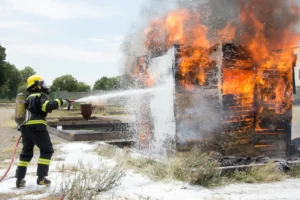
Our documentation solutions are designed to fit the specific regulatory requirements and operational needs of the financial services sector. We work closely with your team to ensure that every document is relevant, accurate, and tailored to your industry, making sure nothing is overlooked.
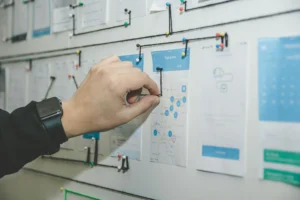
We meticulously review every aspect of your operations to identify potential risks and vulnerabilities. Our thorough
approach ensures that all critical processes are documented, and every contingency is planned for, enhancing your organization’s resilience.

We proactively identify potential issues and develop innovative solutions to address them. By fostering a culture of
problem-solving, we ensure that your business continuity plans are comprehensive and adaptable to changing circumstances, minimizing the impact of disruptions.
Continuity & Recovery FAQs

A BCMS is a framework for identifying an organization’s risk of exposure to internal and external threats. It provides a system for building organizational resilience and the capability for an effective response that safeguards the interests of key stakeholders, reputation, brand, and value-creating activities.
Aligning your BCMS with ISO standards, such as ISO 22301, ensures that your business continuity practices meet international best practices. This enhances organizational resilience, improves stakeholder confidence, and ensures regulatory compliance.
Business continuity planning is crucial because it helps organizations prepare for unexpected events, ensuring that critical business functions can continue during and after a disruption. This minimizes downtime, protects the company’s reputation, and ensures regulatory compliance.
While a BIA focuses on the impact of disruptions on business processes, a TIA evaluates the potential effects of technology-related disruptions on an organization’s operations. It identifies critical technical dependencies and develops strategies to mitigate risks.
RTO is the maximum acceptable amount of time that a business process can be down after a disruption before the business is negatively impacted. RPO is the maximum acceptable amount of data loss measured in time. Both are critical metrics in business continuity planning.
Business continuity is about maintaining operations during a disruption, while business resumption focuses on restoring normal operations after the disruption has been managed. Continuity plans are activated during the disruption, and resumption plans are implemented afterward.
While business continuity focuses on maintaining operations during and after a disruption, organizational resilience is a broader concept that includes the ability to adapt and thrive in the face of various challenges. Resilience encompasses continuity but also includes proactive risk management and adaptability.
We pride ourselves on delivering business continuity & recovery solutions that make a real difference. Our clients trust us to safeguard their operations and build resilience. Here’s what they have to say about partnering with us
Don’t wait for the next crisis...
Ensure you’re prepared with expert consulting services.